
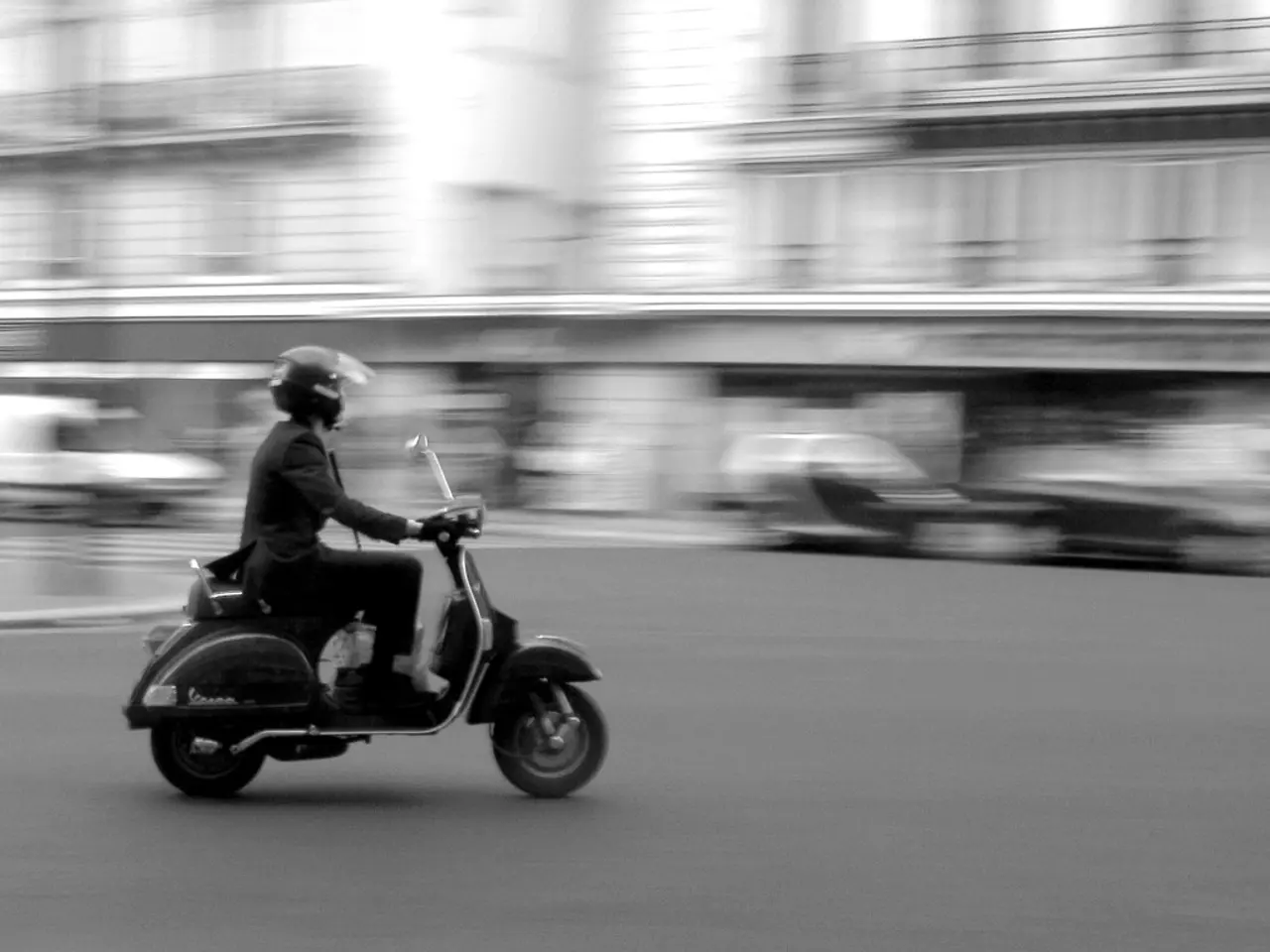
Frequently results in head injuries in severe electric scooter mishaps
Why E-Scooters Need a Brain Check
E-scooters are designed to add convenience, helping you breeze through the last leg of your journey. But, their effortless accessibility comes with a catch, according to Dr. Christopher Spering of the German Society for Orthopaedics and Trauma Surgery (DGOU). At their top speed of 20 km/h, a fall can lead to some nasty accidents.
Emergency 101: First Aid Essentials
In the event of an e-scooter mishap, the DGOU urges you to dial 112, secure the site, and stay calm till emergency responders show up. This guidance holds true whether you've taken a tumble or helped someone else who has.
- Call for help and stay put: If you're injured, someone else has been hurt, or an accident has unfolded, don't leave the scene. Call emergency services, make the area safe, and wait for help to arrive.
- Check their pulse: If the person appears unconscious, look for signs of breathing. Place the injured person in the recovery position, if breathing is evident, to keep them stable and conscious.
- Watch for head injuries: If you suspect a head injury, resist the urge to move the person. Stabilize their head if possible and try not to adjust their position.
- Stop the bleeding: Apply pressure to any deep wounds with a clean cloth to halt excessive bleeding.
- Fractures and immobilization: If you spot visible bone fractures, refrain from moving the affected limb. Stabilize the limb if it's safe to do so.
Helmets: Life Savers in Disguise
According to a study by the Trauma Surgery Department of TUM, head injuries dominate the list of e-scooter accident injuries. In an attempt to minimize these, the DGOU advises donning a helmet, though it isn't obligatory in many locations yet.
Besides staying helmets, the study suggests other precautions:
- Pace yourself: If you zoom around at a faster clip than the maximum 20 km/h, you're inviting trouble. Slow down for a safer ride.
- Sober up: Ride sober. Most e-scooter accidents are nighttime occurrences, and riders are often under the influence of alcohol, particularly men.
- Stay visible: Equip yourself with reflective gear if you're venturing out after dark. Your ride will be safer thanks to better visibility.
While we can't control the actions of others, it's our duty to protect ourselves and our fellow riders. The rules of the road also apply to e-scooter enthusiasts: Ride on the right side, obey pedestrian right-of-way, and follow lane markings. Park responsibly, ensuring your ride doesn't obstruct pedestrian access. And keep in mind that smart technologies such as collision detection, automatic lighting, and rider behavior monitoring will soon be your new e-scooter companions, guiding you towards safer travels.
- Science reveals that head injuries are prevalent in e-scooter accidents, as stated by a study by the Trauma Surgery Department of TUM.
- To mitigate this risk, the DGOU recommends considering workplace-wellness and health-and-wellness measures, such as wearing a helmet (though it's not mandatory in many places), even if it's not a legal requirement yet.
- As fitness-and-exercise enthusiasts, we should also prioritize mental health and adopt therapies-and-treatments that reduce stress and improve focus while riding e-scooters, such as mindfulness or meditation, to enhance our overall safety.
- Lastly, we must practice proper nutrition, ensuring a balanced diet rich in vitamins, minerals, and nutrients to maintain our physical health, strength, and endurance, and thus reduce the risk of accidents.