
"Isn't it human nature to embody our own internal contradictions?"
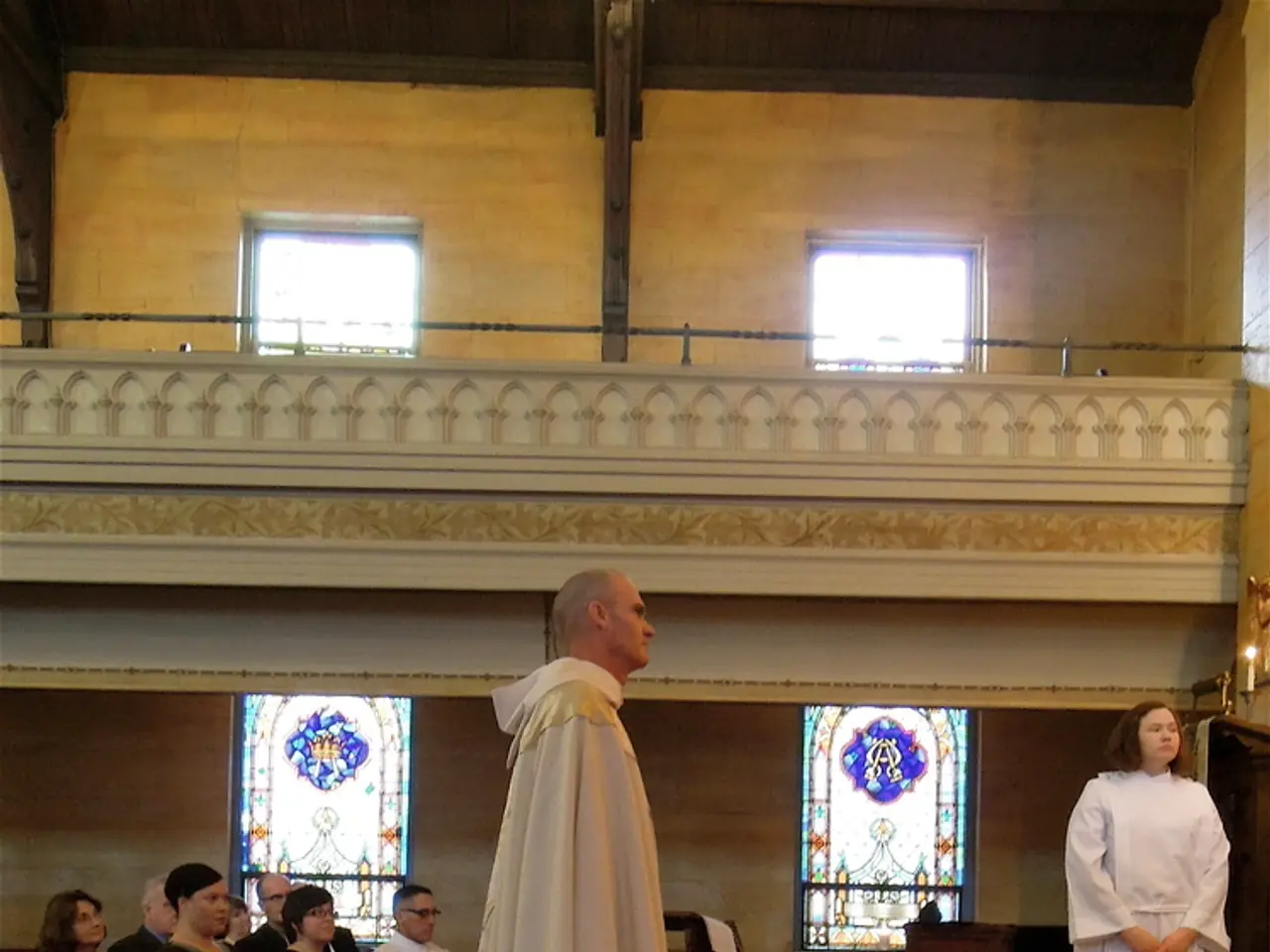
In a serene monastery, nestled amidst the tranquil countryside, lives a man who embodies an intriguing fusion of modern and ancient practices – Professor Frank-Gerald Bernhard Pajonk.
Pajonk, a renowned figure in the field of psychiatry, is not only a professor but also a practising psychotherapist. His professional life revolves around understanding and addressing the complexities of the human mind, a task that requires a unique blend of scientific rigour and spiritual insight.
Despite his impressive academic credentials, Pajonk acknowledges the limits of science and the importance of empirical evidence. He follows the rules of empiricism, basing his work on observable phenomena and evidence rather than on mere speculation.
Yet, Pajonk does not disregard the wisdom of the past. His lifestyle integrates modern practices with ancient traditions, a testament to his belief in finding harmony between the two worlds.
Pajonk's identity as a religious person is an integral part of his life. He resides in the monastery, not merely as a professional seeking solitude, but as a man seeking spiritual enlightenment.
However, Pajonk, like any other human being, is not immune to inner conflicts. He navigates these conflicts with the same empathy and understanding that he extends to his patients. He does not believe in miracles as a doctor, preferring instead to focus on the healing power of human connection and the transformative potential of self-awareness.
Despite extensive online searches, there is no information available about the origins of Professor Frank-Gerald Bernhard Pajonk. His journey to the monastery and his path to becoming a professor of psychiatry and a psychotherapist remain shrouded in mystery, adding an air of intrigue to his already captivating persona.
In the end, Professor Pajonk stands as a beacon of wisdom and compassion, a testament to the power of integrating modern medicine with ancient traditions, and a reminder that even in the face of inner conflicts, one can find solace and healing.